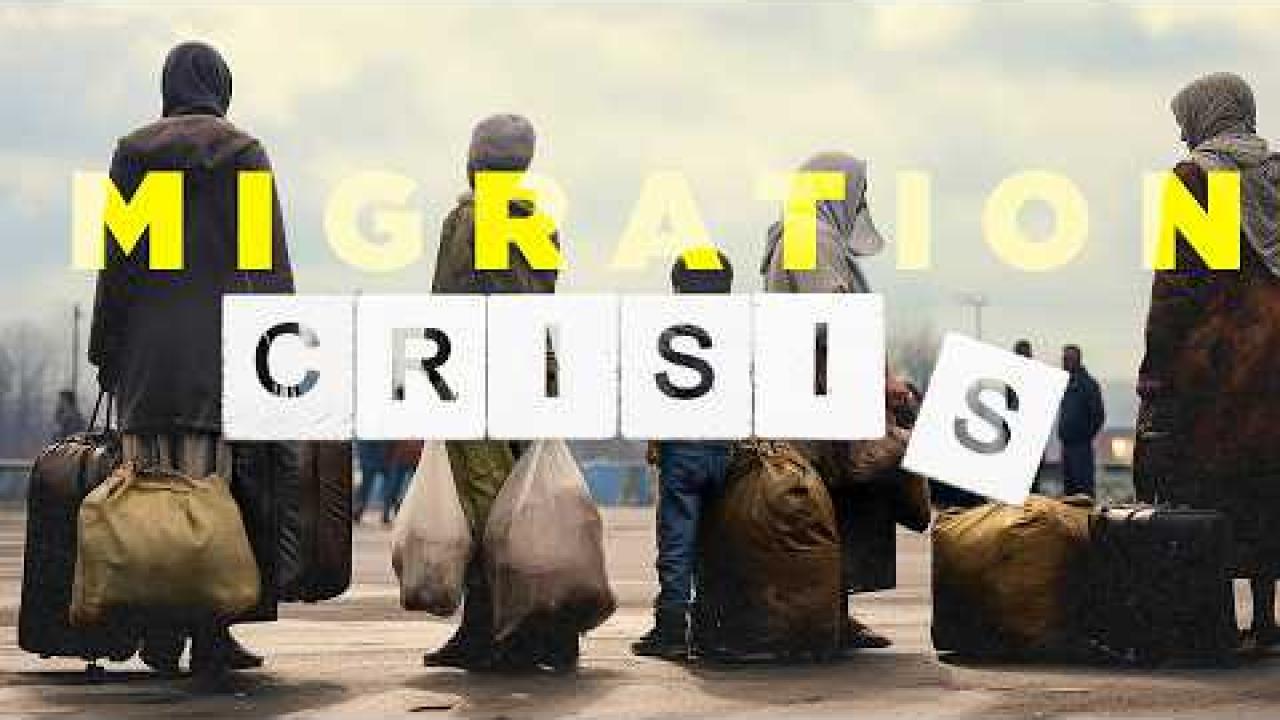
Canada’s Migration Crisis: Ancient wisdom + THIS would Fix the Broken System
Immigration is becoming a growing concern in the nations of Canada, the United States and the UK. All of these nations are experiencing a concerning population decline making the need for immigration crucial for their economic stability. But with mass immigration, there poses quite a few concerns such as housing, medical and the culture clashes that can sometimes ensue. In this video, we will address some of the benefits and concerns of immigration.
In both the recent US presidential election and in the earlier parliamentary election in the UK, one of the key issues was the subject of large-scale migrations that were deemed to be bringing uncontrollable numbers of people, legally and illegally, across national borders.
Indeed, the past decade has witnessed massive migrations of people due to displacement as a consequence of either war, oppression, poverty, or political pressure. Millions have been pressing into western Europe, the United States, and Canada. Many claim refugee status, but concerns in Europe and North America center around the fact that a large number of these people are not refugees but economic migrants, circumventing normal immigration procedures.
This has led to a bitter debate between opponents and proponents of migration. Renown economist, author and Oxford University professor Dr. Ian Goldin has entered the debate in his recent book, The Shortest History of Migration, Dr. Goldin puts forward his thesis that migration, or immigration, brings numerous benefits to the receiving nation, in terms of economic stimulus, boosting the labour pool and leading overall to a more vibrant and sustainable economy. He notes that migration of peoples has been going on for millennia.
However, Dr. Goldin also notes that for immigration to be beneficial it must be managed, and that the inflow of people must be prepared for by growing infrastructure capacity to accommodate new arrivals. Good management is needed to ensure that the reception of migrants includes helping them to understand the laws and culture of the nation, and providing for adequate capacity in medical services, education, housing, policing and employment opportunities. He also stresses that newcomers should start to work and pay taxes so they feel they are contributing. Dr. Goldwin sees no problem with migration, but he adds that it must be managed better, and should be within the capacity of a nation to receive a measured volume of newcomers.
In Western nations the very low natural birthrate is creating a present and future labour shortage. Immigrants therefore are essential to ensure worker availability at all levels of the employment spectrum. Without that inflow the standard of living would inevitably fall, along with productivity and economic activity.
As mentioned, there are very serious concerns being expressed in Europe, the UK and the US about the volume of seemingly uncontrolled migration impacting their societies. Canada however is the G20 nation that has the highest percentage of immigrants. In 2023, Canada received 6.19 immigrants per 1000 of population. The US in the same period, with all their concern with the southern border, received 2.77 immigrants per 1000. I should add that the US number includes estimated numbers of illegals entering U.S. territory.
Immigration in Canada has raised huge concerns that are taking a political toll on the Liberal government, as there were 240,000 housing starts, but an inflow of 1,276,672 permanent and non-permanent residents in 2023 alone.
This rate is significantly higher than infrastructure, whether housing, medical services, education or even policing, can accommodate. While immigration is crucial to Canada, its management is wanting, as Dr. Goldin would agree.
As a former director in a large school system, I can attest that such a rate does not allow the time or resources for critical cultural education, whether in language skills, behaviour expectations, or even basic knowledge of shopping culture or how to show respect to the elderly, teachers, women and employers, and especially the law of the land.
Laws dealing with migration and embracing immigrants are not just associated with the modern world. Anciently many nations developed rules of accommodation, but perhaps few were as insistent that migrants be treated with kindness and respect as the law that governed ancient Israel. Note this statement of policy or law written 2,600 years ago.
And if a stranger dwells with you in your land, you shall not mistreat him. The stranger who dwells among you shall be to you as one born among you, and you shall love him as yourself; for you were strangers in the land of Egypt: I am the Lord your God.
(Leviticus 19:33-34)
There was also the idea that the culture of the land was to be protected to ensure its stability, uniqueness and way of life would not be lost.
One law and one custom shall be for you and for the stranger who dwells with you.
(Numbers 15:16)
Perhaps the ancients knew something about preserving national identity and culture that we have forgotten.
Immigration is necessary, but it needs to be measured, managed and respectful of the laws and culture of the host land.
What are your thoughts? Please let us know in the comment section below.